

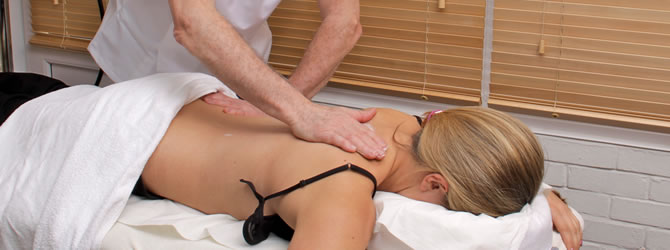
What is MSK Therapy?
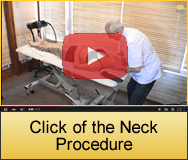

MSK Therapy is a system of assessment and treatment to restore the balance, position, and functionality of the structures of the body. It has its background in ancient medicine and has been developed and refined over many centuries. It is not a replacement for any forms of modern medicine but will integrate with modern medicine for specific musculoskeletal problems. There will, however, be some overlap of treatments for certain conditions.
Musculoskeletal Therapistic assessment, together with a general medical assessment, forms the basis of musculoskeletal therapistic diagnosis. Once the diagnosis has been obtained various treatments, depending upon the area of the body under consideration may be applied.
The Musculoskeletal Therapist, at their discretion, may use other forms of therapy to assist the healing process, these may include techniques and equipment utilising ultrasound, electrotherapy, laser and nutrition.
For further information, or to discuss your condition, contact us now
Contact UsFurther Reading
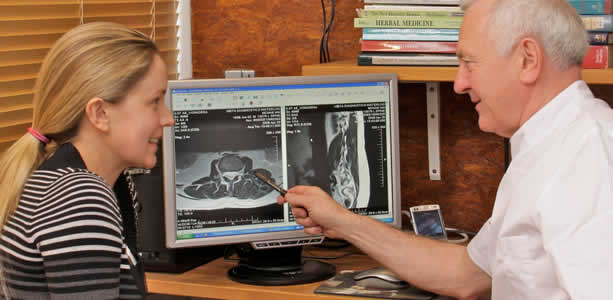
The Musculoskeletal Therapistic Process
MSK Therapy can be likened to peeling the layers off an onion, in other words it may be necessary for several treatments, incurring changes to the tissue and joints to occur before the underlying problem is reached and released. So while it is possible for a single treatment to resolve the symptoms several treatments may be necessary to give a complete resolution to the problem.
Every person is different, MSK Therapy is a holistic treatment and therefore the treatment given will relate to the age, structure, physical strength and many other factors including the patient’s acceptance of the musculoskeletal therapistic treatment. The treatment can therefore be adapted to be as gentle or as robust as the condition and the person requires. The gentle treatments are often as effective as those that are more robust and should be discussed and explained to the patient as the treatment progresses.
MSK Therapy can be used as an aid in resolving less obvious problems such as Headaches and Migraines, Irritable Bowel Syndrome (IBS). Often there is a component of body tension that is as a result of a body condition, or pain, which can be helped by releasing the muscular tension and as an aid to improving organ function.
Reiterating the holistic nature of musculoskeletal therapistic treatment it is therefore appropriate for all ages providing the necessary precautions are taken and the treatments adapted accordingly.
Areas Musculoskeletal Therapists Can Treat
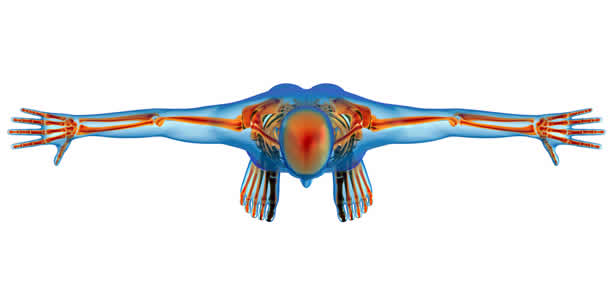
Musculoskeletal Therapists are often thought of as being specialists in dealing with problems relating to the spine but they are fully trained to treat all the other joints of the body, fingers and toes, hips, knees and ankles, and in the arms, shoulders, elbows and wrists; and even the joints in the skull and those of the jaw.
Equally they treat problems that relate to muscles, tendons and ligaments.
The Spine
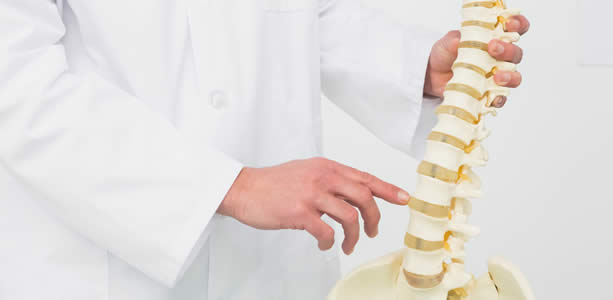
The spine is a functional unit, even if we tend to refer to parts of it as discrete areas such as ‘the neck’, ‘the back’, ‘the lumbar’, etc so it is no wonder that a malfunction in one part of the spine will reflect in other parts. For example, a person with low back pain may also have a secondary problem of neck pain.
If one considers the spine, the vertebrae support the skull and rest on the sacrum as part of the pelvis. The coccyx lies beneath the sacrum like a vestigial tail. The bony vertebrae are separated by a cartilaginous disc and surround the spinal cord providing protection and facilitating movement.
At each vertebral level are small joints, which are formed by contact points, on the left and on the right of the spine, and have many characteristics similar to those of the joints in the fingers. Obviously there are differences, but each of them may be moved and which result in a ‘clicking’ noise, which many people will have heard from those who ‘crack’ their knuckles.
Peripheral nerves exit from the spine, at each vertebral level, and are involved with the function of the organs and control of the body movement. Also sensory information is passed back to the brain from these regions such as pain, position, temperature etc.
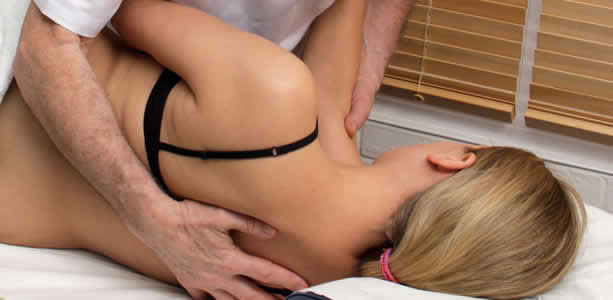
Spinal Manipulation
When the ‘cracking’ occurs as a result of musculoskeletal therapistic treatment of the spine it can cause some consternation however, many people have spines that will ‘crack’ routinely as they move. This ‘cracking’ is the result of realignment of the joints and is totally benign when carried out by an Musculoskeletal Therapist who has taken all the necessary factors into account and excluded those that might be contraindicated.

The Benefit
The result of any realignment can be to reduce the stresses on the surrounding tissue, possibly to relieve the pressure on peripheral nerve roots and hence reduce, or stop, the symptoms, such as pain, numbness, pins and needles and other sensory manifestations of nerve root compression. The relief from such realignments may be instantaneous, result in partial relief, or that relief may come over a period of days.
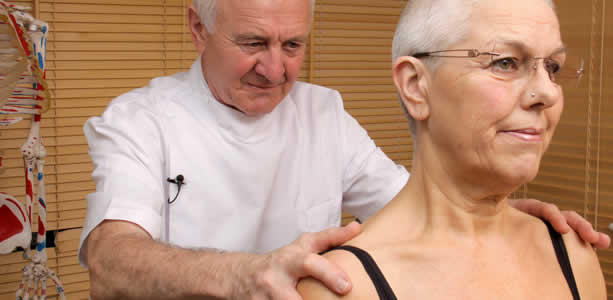
Reaction to Treatment
The symptoms may return, although often not as severe, as the body’s protection mechanisms cause the muscles to increase their tone as a ‘guarding’ mechanism causing the joints to move into an aberrant position (diverging from the normal).
In some cases the patient may have a reaction to the treatment resulting in an increase in their symptoms, or for the symptoms to apparently move to another location. This movement of the symptoms may be due to another area of malfunction, which, now the initial symptom has been reduced, is able to report its problem to the brain, or it may be due as a reaction to increased mobility at the site of the original problem increasing stresses elsewhere.
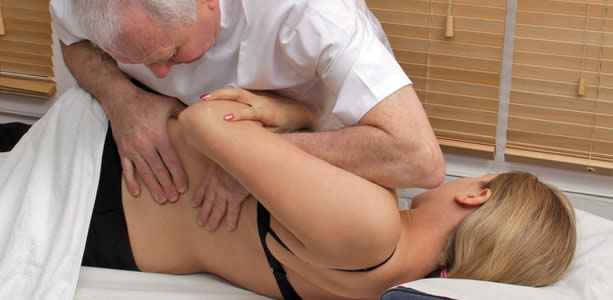
Lumbar Spine Releases
The Musculoskeletal Therapist will probably work on the surrounding tissue in the area being treated to reduce the tension through the muscles and will facilitate the release of the joints. Positioning of the spine makes the release of the joints simpler and means less force is required.
Those who have received musculoskeletal therapistic treatment for low back pain may be aware of the side lying position that can result in the release of the joints of the lumbar spine. In many cases the release can occur with gentle pressure or rocking movement.
Some more robust treatment can be necessary in heavily muscled persons, and the Musculoskeletal Therapist will discuss this with the patient at the time of treatment.
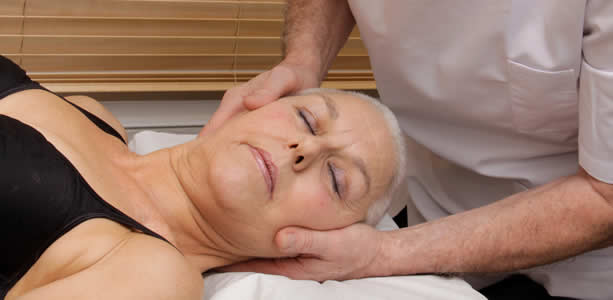
Cervical Spine Releases
Manipulation of the spine, as discussed previously, can be emotive particularly when manipulating regions of the neck, which is close to the hearing mechanisms, and therefore seems to sound much louder increasing the patient’s cause for concern. It is mostly carried out with the patient laying on their back, but other positions are possible.
This is an area where it is essential for the Musculoskeletal Therapist to fully communicate with the patient. Treatment of the neck and surrounding areas should be undertaken with plenty of soft tissue preparation and dialogue.
The treatment should be as specific as possible resulting in only the affected joints being released rather than a generalised manipulation of the region thus keeping the potential for a treatment reaction, or adverse patient reaction, to a minimum, again gentle movements are often possible achieving surprisingly good results with minimum discomfort to the patient.
Other Joint Manipulation
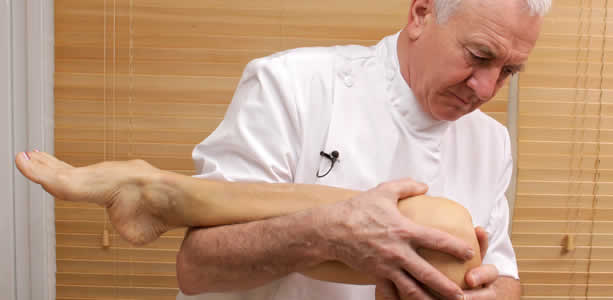
It is possible for other joints in the body to become displaced and which can be realigned with manipulation giving consequential relief, carpal bones of the hand and tarsal bones of the feet, as examples, however there are others that respond well to treatment.
Soft Tissue Treatment & Massage
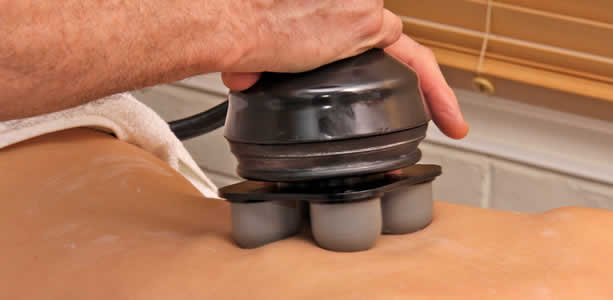
Not all MSK Therapy is manipulation, which in truth is only a small part of the musculoskeletal therapistic process. Much of the treatment time is taken up with preparing and treating the muscles – massage, muscle energy and neuro-muscular techniques that are to release and re-balance the muscles to restore proper functionality and movement, easing stresses and strains on joints, tendons and ligaments.